Building or renovating a mid-century modern home is not about copying a look.
It is not enough to add breeze block, a colorful door, a few globe lights, and call it done. The best mid-century homes worked because the entire design had discipline. The roofline, windows, materials, landscape, light, and floor plan all worked together.
That is the difference between style and architecture.
Mid-century modern design emerged from a belief that homes could be simpler, smarter, more open, and more connected to the way people actually live. The best examples used clean lines, honest materials, efficient plans, indoor-outdoor living, and a clear relationship to climate and site.
Those ideas still matter.
Start with proportion
A mid-century modern home lives or dies by proportion.
The roofline matters. The window placement matters. The depth of the overhang matters. The rhythm of the posts, the height of the fascia, the size of the masonry, and the way the house meets the ground all matter.
If the proportions are wrong, no amount of furniture or finish selection will save it.
This is where many modern “mid-century inspired” projects fall short. They borrow the surface details but miss the structure underneath. Good design starts with the big moves first.
Light should shape the house
Mid-century homes were designed around light.
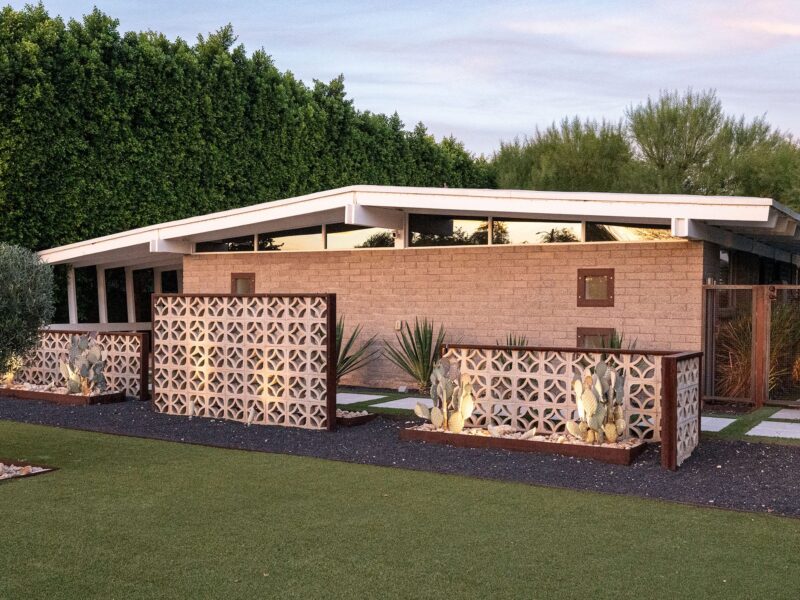
Clerestory windows, large glass openings, shaded patios, courtyards, and deep overhangs were not just decorative choices. They helped control sunlight, create privacy, frame views, and connect interior spaces to the landscape.
In Phoenix, this matters even more.
A good design should understand heat, shade, orientation, and the desert sun. Big glass can be beautiful, but it needs to be handled intelligently. The goal is not just more windows. The goal is better light.
Materials should feel honest
Mid-century design works best when the materials feel clear and intentional.
Block, brick, wood, terrazzo, concrete, steel, glass, plaster, and tile all have a natural place in this language. The mistake is trying to use too many things at once or forcing a trendy finish where a simpler material would have been stronger.
Restraint is part of the style.
A good renovation does not need to erase everything old. In many cases, the strongest move is knowing what to keep, what to restore, what to simplify, and what to remove.
The landscape is part of the architecture
A mid-century home should not feel separate from its site.
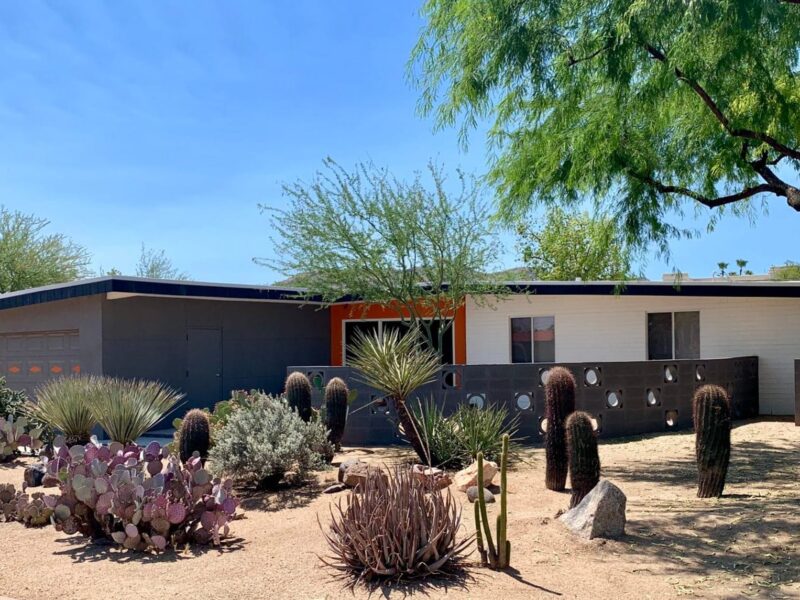
The courtyard, patio, pool, planting, hardscape, shade, and view lines should support the architecture. In Phoenix, the landscape is not an afterthought. It is part of how the home lives.
Desert planting, masonry walls, breeze block, shade structures, and outdoor rooms can completely change the way a house feels. Done well, the exterior becomes another living space.
Done poorly, it becomes decoration.
Interiors should support the architecture
Mid-century interiors do not need to feel like a time capsule.
The goal is not to recreate 1962 piece by piece. The goal is to create rooms that feel warm, useful, edited, and connected to the architecture.
Furniture, lighting, flooring, cabinetry, tile, and color should all support the larger idea. When the interior fights the house, the whole project starts to feel confused.
The best interiors feel current without losing the character of the home.
Renovation requires judgment
Not every mid-century home should be restored the same way.
Some homes need preservation. Some need a careful renovation. Some need a larger rethinking. The key is understanding what gives the home its value before making decisions.
Which walls matter? Which materials are original? Which features are worth saving? Which updates will improve the home without flattening its personality?
Good renovation is not just about making something new. It is about knowing what should remain.
The right team matters
A mid-century project needs people who understand the design language.
That does not always mean the biggest firm or the most expensive contractor. It means the right judgment, the right vision, and the right level of care. A poor decision early in the process can affect the entire project.
The best results come from aligning the design, budget, materials, trades, and construction details before the project starts making expensive decisions.
The bottom line
Building or renovating a mid-century modern home takes more than style.
It takes proportion, restraint, material intelligence, respect for the original architecture, and a clear understanding of how the home should live today.
When those pieces come together, the result does not feel trendy. It feels timeless.