Mid-century modern home restoration is not about turning a house into a museum.
It is about understanding what gives the home its character, then making smart decisions about what to preserve, what to repair, and what to update. The best restorations make a home live better today without erasing the details that made it special in the first place.
That balance matters.
A mid-century home can handle change. Systems need updating. Kitchens and bathrooms often need work. Roofs, plumbing, electrical panels, windows, and mechanical systems may need attention. But the architecture should still guide the process.
Start with the condition of the home
Before making design decisions, understand what you are working with.
Many Phoenix mid-century homes were built on concrete slabs with block construction, which can make them solid and durable. The major items to review are often plumbing, electrical, roofing, heating and cooling, windows, drainage, and the overall condition of the structure.
These are not glamorous details, but they matter.
A good restoration plan starts with the practical issues first. Once the major systems are understood, you can make better decisions about layout, finishes, budget, and scope.
Know what is worth saving
The most important question is not, “What can we replace?”
It is, “What should we keep?”
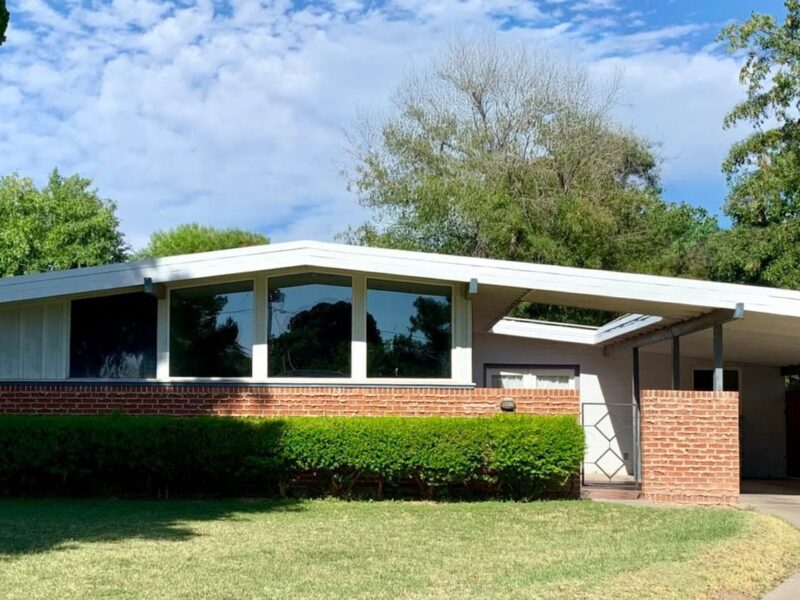
Original cabinets, doors, hardware, windows, masonry, breeze block, terrazzo, wood ceilings, built-ins, light fixtures, fireplaces, house numbers, patio details, and clerestory windows can all contribute to the character of the home.
Not every original feature needs to stay. Some pieces may be damaged, poorly altered, or no longer functional. But every original feature should be considered before it is removed.
Once the right details are gone, they are hard to get back.
Update with restraint
A successful restoration does not mean avoiding new materials.
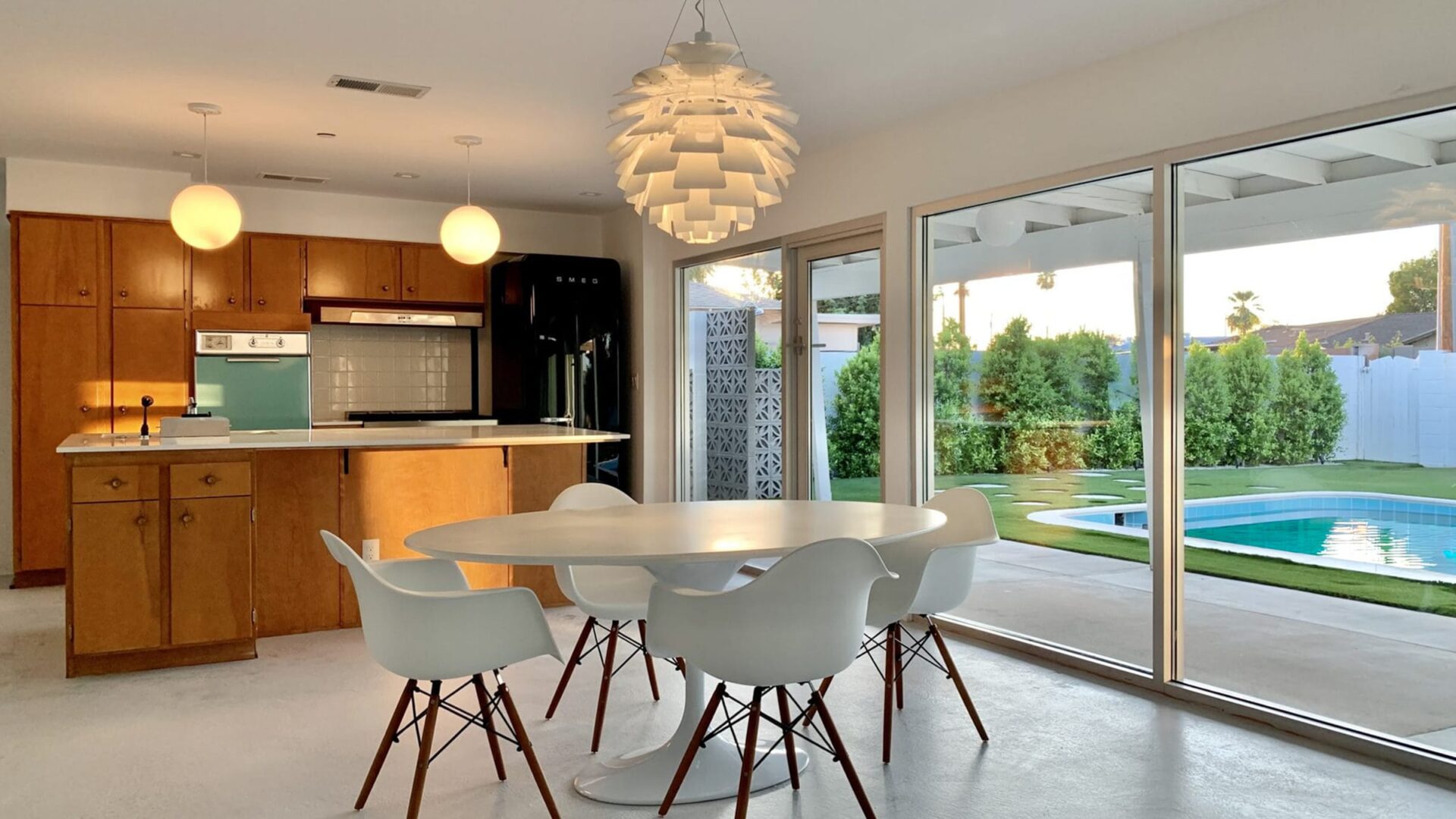
It means choosing new materials carefully. Flooring, cabinetry, tile, lighting, countertops, paint, appliances, and landscape details should all feel connected to the architecture. They do not need to be literal copies of the past, but they should respect the language of the home.
The mistake is forcing a generic remodel into a specific architectural house.
A mid-century modern home usually benefits from clarity, restraint, proportion, and warmth. Too many finishes, oversized fixtures, heavy details, and trendy materials can quickly flatten the character of the home.
Let the architecture lead
The best mid-century restorations begin with the house itself.
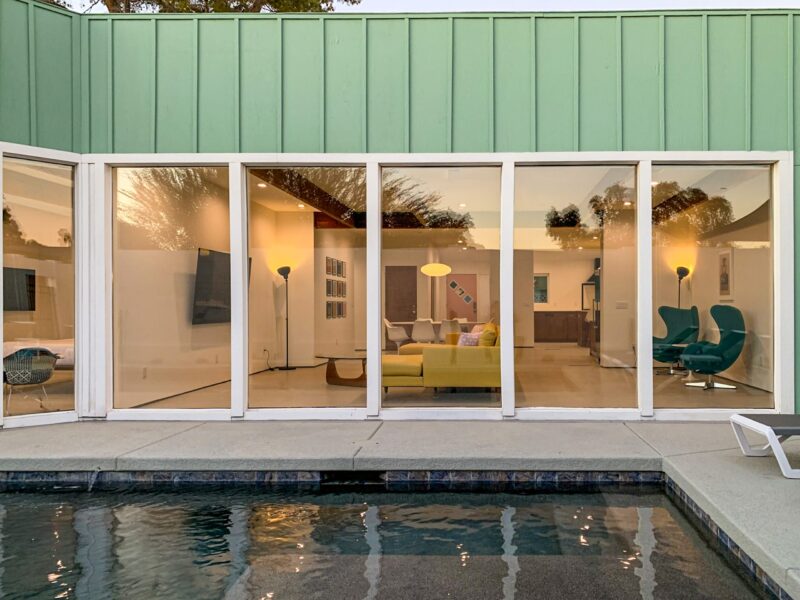
Look at the roofline, the light, the window placement, the masonry, the relationship to the patio or pool, and the way the rooms connect. These elements should influence the renovation plan.
If the home was designed around indoor-outdoor living, strengthen that connection. If the original kitchen has good cabinet lines, consider whether it can be restored or reworked. If the house has strong clerestory light, avoid changes that block or confuse it.
The goal is not to make the home look newly built.
The goal is to make it feel resolved.
Furniture and styling should support the home
Mid-century furniture can help complete the feeling of a restored home, but it should not be doing all the work.
A house does not become mid-century modern because it has an Eames chair or a globe pendant. The architecture has to carry the idea first. Furniture, lighting, art, and accessories should support the home, not distract from it.
The strongest spaces usually feel edited, not themed.
The bottom line
Restoring a mid-century modern home takes judgment.
It requires knowing what to preserve, what to update, and how to make new decisions that feel connected to the original architecture. Done well, the home becomes more livable without losing its identity.
That is the point of restoration.
Not to go backward, but to carry the best parts of the home forward.