Phoenix has always been more than stucco, tile roofs, and suburban sprawl.
The Valley has a deep modernist story shaped by architects who understood light, climate, land, material, and the way people wanted to live in the desert. Their work helped define a different version of Phoenix: lower, cleaner, more open, and more connected to the landscape.
Frank Lloyd Wright, Al Beadle, and Ralph Haver each approached modernism differently, but together their influence still shows up across the city.
Frank Lloyd Wright
Frank Lloyd Wright’s influence on Arizona is impossible to separate from Taliesin West.
Built in the foothills of the McDowell Mountains, Taliesin West was Wright’s winter home, studio, and desert laboratory. It was not simply placed in the desert. It was shaped by it. Stone, shade, low horizontal forms, canvas, concrete, and view corridors all worked together to create a new relationship between architecture and landscape.
Wright’s work in Arizona helped establish the desert as a serious architectural setting. His ideas around organic architecture, site response, and the integration of building and landscape continue to influence how people think about design in Phoenix and Scottsdale.
His impact goes beyond individual buildings. Wright helped make the desert feel like a place where modern architecture belonged.
Al Beadle
Al Beadle brought a different kind of modernism to Phoenix.
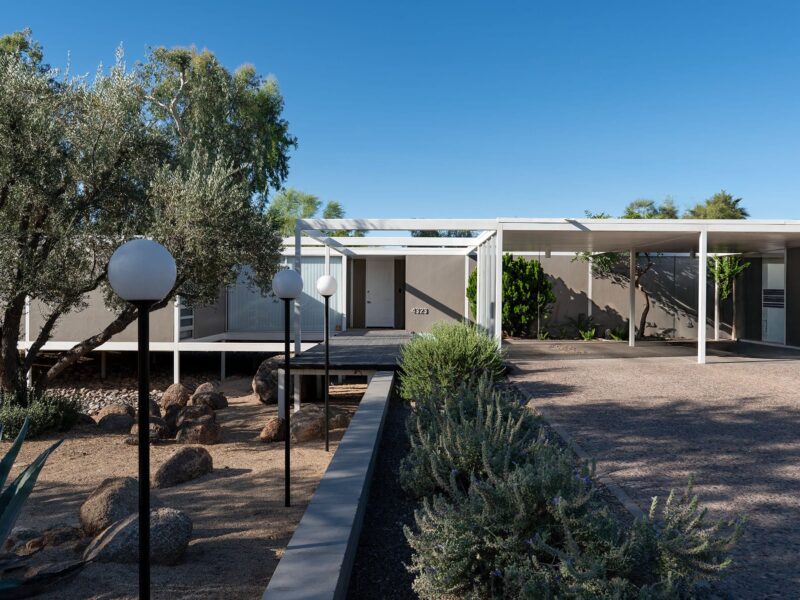
His work was disciplined, restrained, and often uncompromising. Beadle’s buildings favored clean geometry, steel, glass, masonry, and a strong sense of proportion. Where Wright often worked with organic forms and desert materials, Beadle moved toward a sharper, more minimal architectural language.
His residential work, apartment buildings, and commercial projects gave Phoenix some of its most serious modernist architecture. Paradise Gardens remains one of the clearest examples of his influence at the neighborhood scale: simple forms, strong lines, deep shade, and a quiet confidence that still feels current.
Beadle’s work matters because it raised the standard. It showed that Phoenix modernism could be rigorous, elegant, and deeply connected to the desert without being decorative.
Ralph Haver
Ralph Haver helped bring modern design to everyday Phoenix.
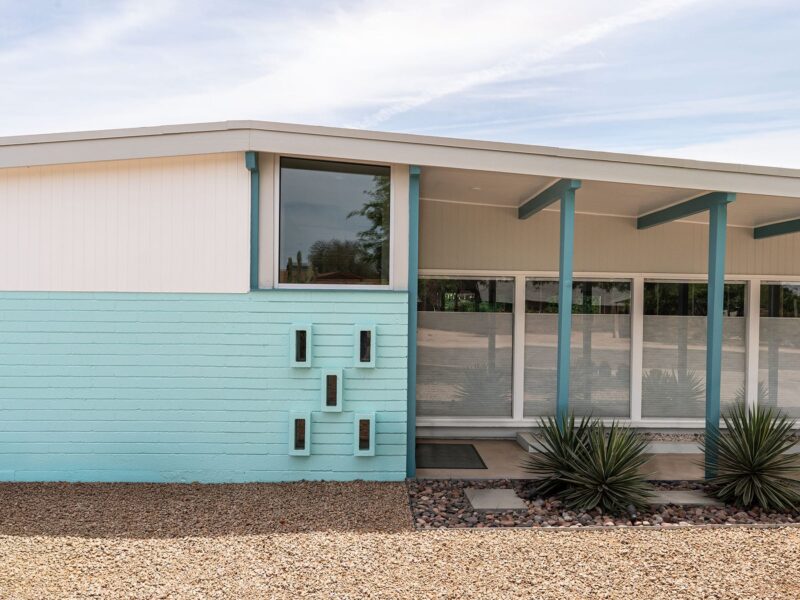
While Wright and Beadle are often discussed through custom homes and landmark projects, Haver’s influence is seen across neighborhoods. His work helped define the casual, optimistic side of postwar Phoenix: low-slung rooflines, patio ports, clerestory windows, masonry walls, exposed beams, indoor-outdoor living, and efficient plans designed for modern family life.
Haver homes were approachable, livable, and visually distinctive. They gave regular buyers access to modern design at a scale that shaped the look and feel of the Valley.
That is why his work still resonates. Haver understood that good design did not have to be reserved for custom estates. It could show up in tract housing, schools, churches, offices, and neighborhoods that still feel relevant decades later.
Why their work still matters
The best Phoenix modernism was never just about style.
It was about climate, shade, proportion, material, and a belief that architecture could improve daily life. Wright, Beadle, and Haver each expressed that idea in different ways, but their work points to the same larger truth: the desert rewards thoughtful design.
That lesson is still important.
As Phoenix continues to grow, the value of these homes and buildings is not only historic. It is practical. They remind us that good architecture responds to place. It understands heat, light, view, privacy, and the relationship between indoors and out.
The best of Phoenix modernism still has something to teach.
And it is still worth protecting.
Mid Mod Phoenix continues that work through curated architect collections, neighborhood guides, real estate strategy, and design-led renovation.